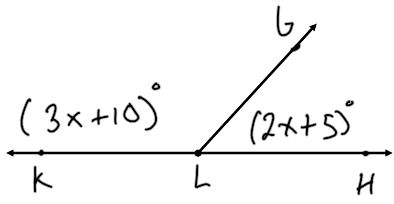
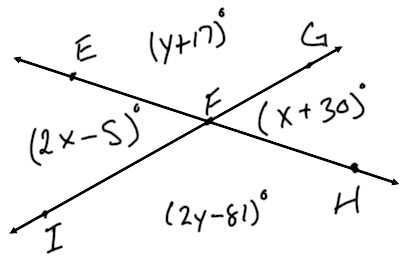
We have seen that angles are formed by the intersection of lines, rays, or
segments, Now we need to understand the relations between the angles
formed by these intersections.
Complimentary Angles:
Two angles are complementary angles if their combined measures total 90°.
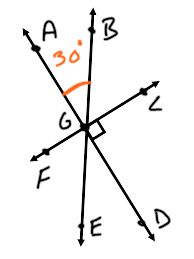
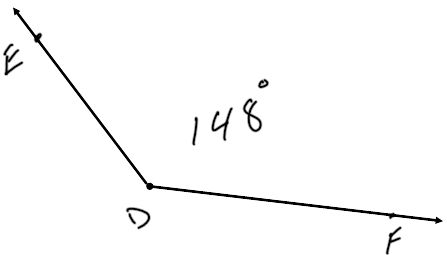
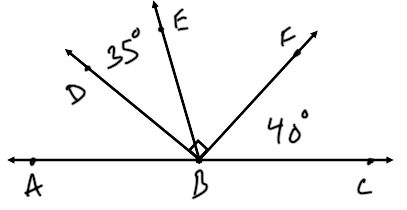
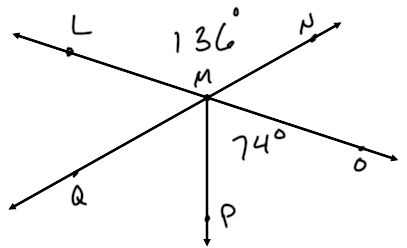
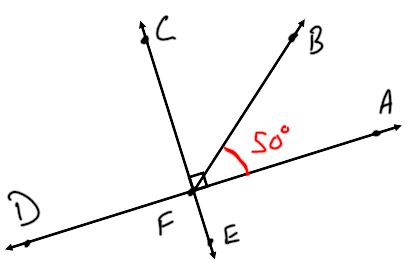
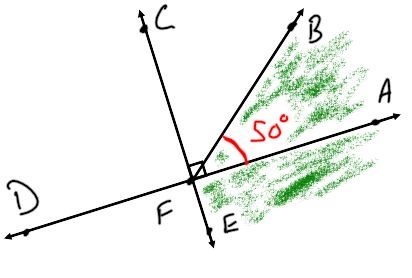
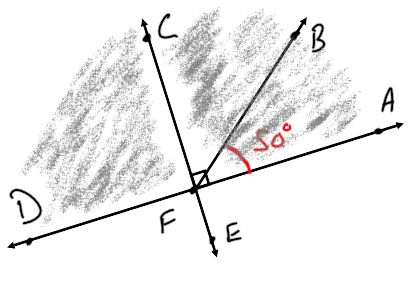
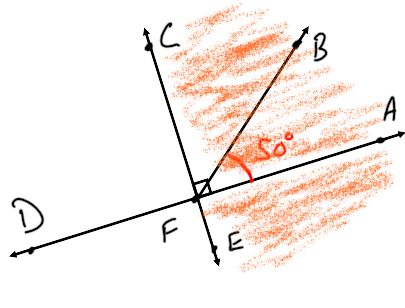
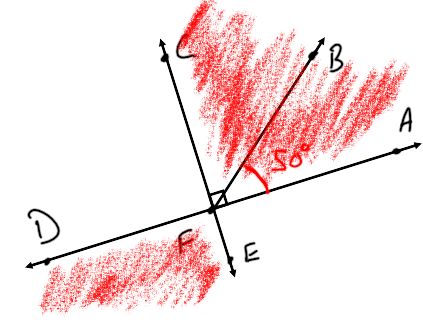
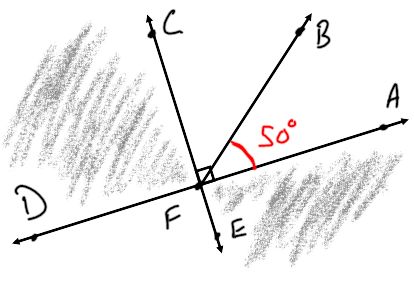
Given the following figures, identify any and all complimentary
angles
Solution:
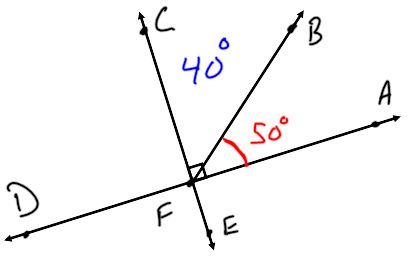
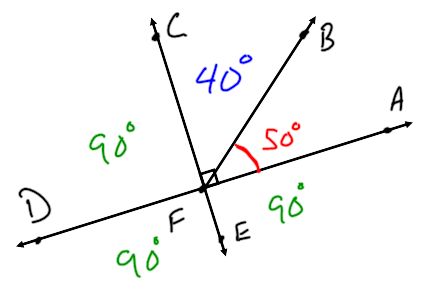
. When we look at the figures we see that
AFC is a right
angle, so it is 90o.
We can now find the measure of
BFC. Now that we
know
BFC = 40o
and we already know that
BFA = 50o
we can say that
BFC
and
BFA are
complimentary angles.
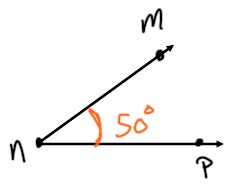
We also see that we have another angle
MNP and its
measure is also 50o .
Since
MNP and
BFC. would also
add up to be 90o we can also
say that
BFC and
MNP are
complimentary angles.
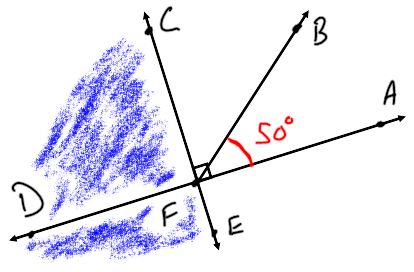
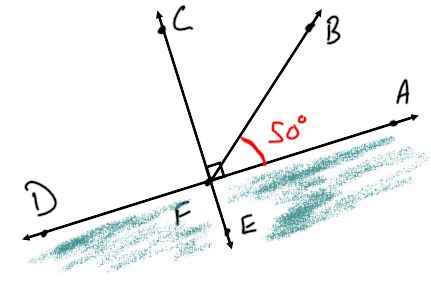
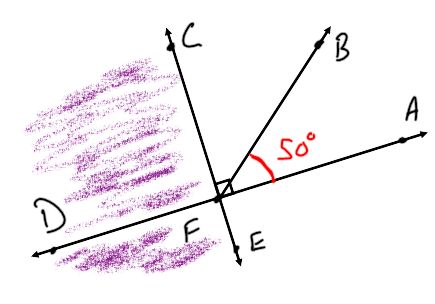
Given the following figures, identify any and all
supplementary angles
Solution:
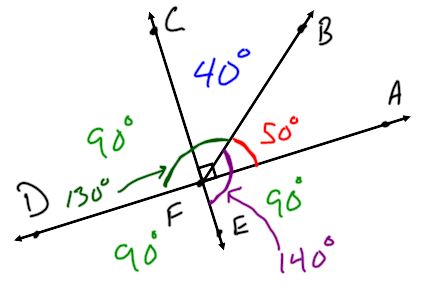
. From the last example we found that
AFB = 90o
and that
BFC = 40o.
Now we
need to know what the measures of
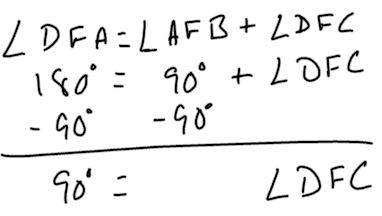
DFC,
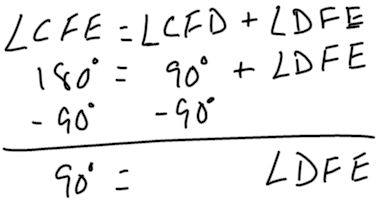
DFE, and
EFA are. So we now
have:
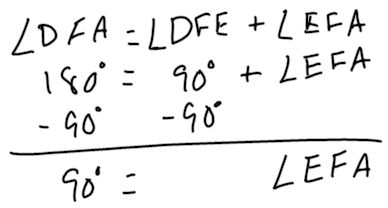
There are even more angle that we need to find before we answer the
question, and they are
DFB, and
EFA. So now we
have identified all of the angles in the figure.
Now
that we know all of the angles we can identify the pairs of angle that
are supplementary, add up to 180o.
The supplementary angles that are next to each other are:
DFB and
BFA BFC and
BFE AFE and
EFD EFD and
DFC DFC and
CFA
The supplementary angles that are NOT next to each other are:
DFB and
MNP <==
Don't forget that angle DFC and
AFE DFE and
CFA
So, in
these figures there are 8 different pairs of supplementary angles.
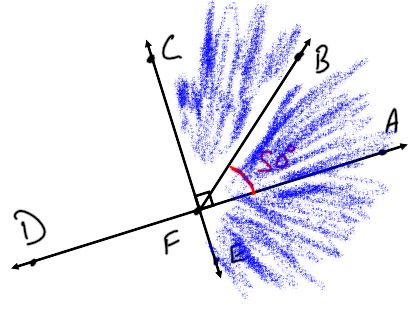
Given the following figure, identify any and all
adjacent angles
Solution:
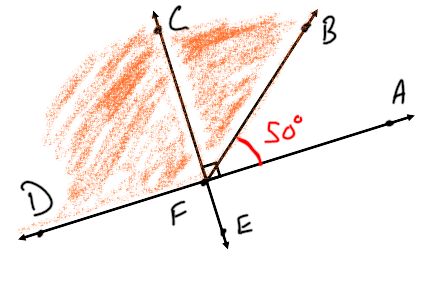
All we need to do is identify the pair of angles that
have a common side.
Here we have
DFC and
CFB as adjacent
angles. Here we have
CFB and
BFA as adjacent
angles.
Here we have
BFA and
AFE as adjacent
angles.
Here we have
EFD and
DFC as adjacent
angles.
Also, we have
CFB and
BFE as adjacent
angles.
And we have
DFB and
BFA as adjacent
angles.
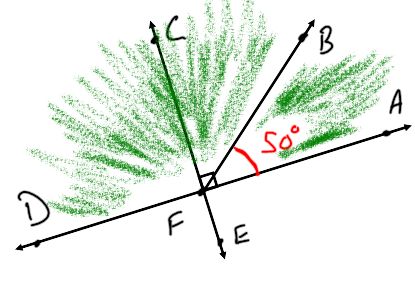
Given the following figure, identify any and linear
pairs
Solution:
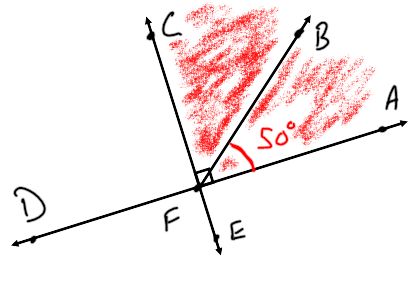
Linear pairs are similar to supplementary angles,
except that they need to be adjacent angle as well.
Here we
have
DFC
and
CFA as a
linear pair.
Here we have
CFA and
AFE as a linear
pair.
Here we have
AFE and
EFD as a linear
pair.
Here we have
EFD and
DFC as a linear
pair.
Here we have
CFB and
BFE as a linear
pair.
Here we have
DFB and
BFA as a linear
pair.
 AFC is a right
angle, so it is 90o.
We can now find the measure of
AFC is a right
angle, so it is 90o.
We can now find the measure of



 to
begin, click
to
begin, click
 for full screen mode
 to
check your answer
to
check your answer to goto the next problem
 to stop the app