Applications of Points, Lines & Planes can take many forms. From simple ideas to complex designs. We will take a look at some of these...
|
Problem: How many fence posts will I need to fence in my garden? Before we begin we will need a bit more in formation.
|
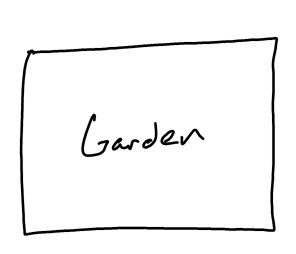
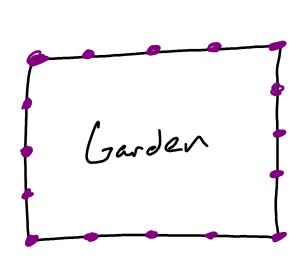
Solution: One of the best ways to figure this out, is to draw it out. As I always say..." When in doubt, draw it out!" So here is my Garden: ![]() I don't really know how long each side is, so I decide to put a post on each corner and then cut each side into quarters. Like this: ![]() So each point represents a post. All I need to do is count how many posts I have. YES, it is just that simple! So I need, 16 posts. |
Watch the video: |
Quick Question...
|
|
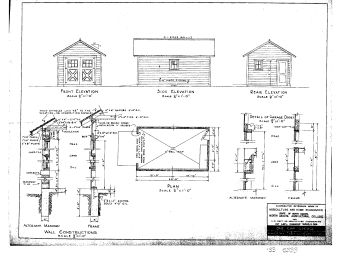
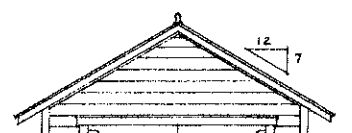
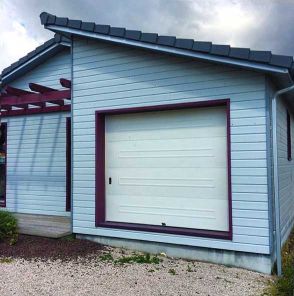
Problem You decide to build yourself a nice garage for your 4-wheeler. After a bit of searching you found plans for a bunch of different building at: (https://www.ag.ndsu.edu/extension-aben/buildingplans) After browsing the plans, you find one that interests you. After looking through the plans you think that it should be easy to build since almost all of the measurement are given, except for the angle measure of the roof, and you wonder what it is. |
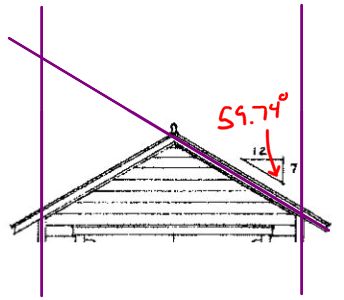
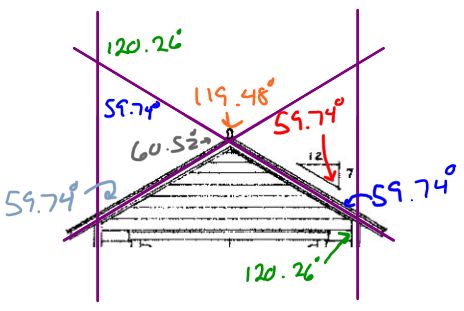
Solution:![]() On the front elevation of the garage you notice the triangle with a "12" and a "7" and ask your "Math Teacher" what this all means. Your teacher mentions that it is a triangle ( which of course you know ) and that we will be looking at triangles in the next chapter. You then ask about the numbers, and your teacher tells you that it identifies slope. Finally you ask what the angle measure is. Your math teacher tells you that Trigonometry is needed ( Chapter 7 ) to find the angle measure, and then tells you that the bottom angle measure is 59.74° after punching a few buttons on the calculator. You wonder how knowing that helps and then you realize that you can figure the rest out with parallel lines and transversals. We know a few things about buildings, so we can draw out the following; ![]() Now we can find the rest of the angles: ![]() To find the angle at the peak of the roof we needed to use a little bit of what we know about triangles. Now we have all of the information we wanted. |
Watch the video: |
Quick Question...
|
|
Problem: Cake? Did I hear some say cake? Well try this...
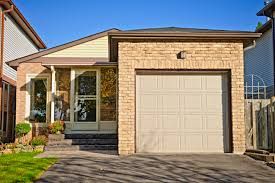
Ok, how about that new garage? ![]() Maybe we should look at something completely different. Like Minecraft !? ![]() |
Solution: Looks easy enough.... ![]() It seems that we need to make sure that each layer is flat and is the same thickness. Oh well, it should still taste good, right? Someone forgot that the floor of the garage needs to be on the same plane as the driveway... ![]() Oops! Ok, flat land in Minecraft is kinda boring, but isn't Nor is this... Think they knew a few things about Points, Lines & Planes? |
Watch the video: |
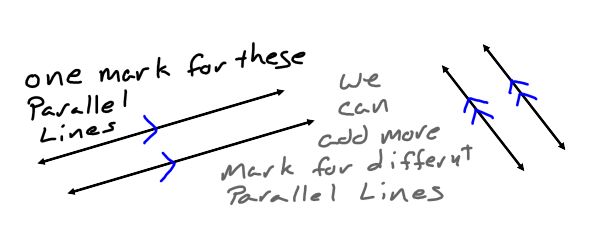
A. Identify parallel lines in BLUE. There is a notation that is used to identify parallel lines just like we identify congruent angles and segments, it looks like this → |
![]() |
| B. Identify alternate
interior angles in RED |
|
| C. Identify congruent obtuse angles in
ORANGE |
|
| D. Identify congruent acute angles in
GREEN. |
|
| E. If the acute angles are 70°, what
would the measure of the obtuse angle be? |
|
.
| Use the
Amtrak
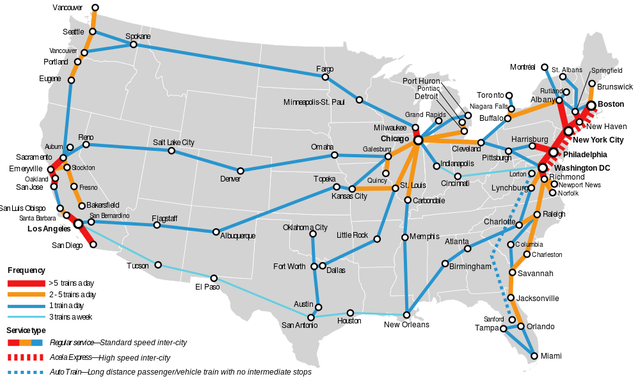
map on the right to answer the following questions: 1. How many different paths could you take to get from Miami to Seattle? 2. If the train only stopped at at each circle/dot, what is the least number of stops possible from Miami to Seattle? |
![]() |
| You plan on making the
trusses for your garage ( see Example B ). Use the truss on the right to identify the following: 3. Use BLUE marks to identify all congruent boards 4. Use RED marks to identify all congruent angles. |
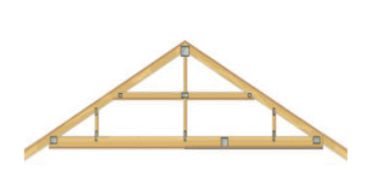
![]() |
| Use the truss on the right to identify the following: ( see the "Quick Question" for Example B ) 5. Identify all of the angle measures, a - n. |
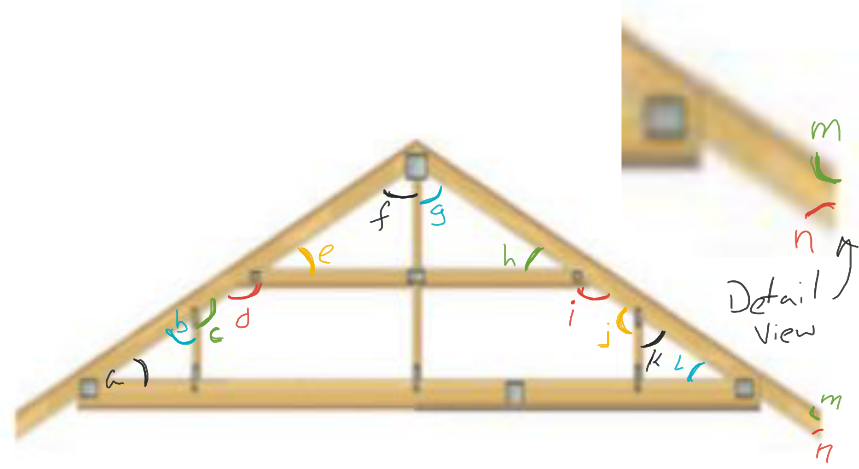
![]() |
| Use the Quilt Square on the
right to answer questions 6 - 8 6. Use GREEN to draw and identify all parallel lines. 7. Use ORANGE to identify all congruent angles. 8. Can you determine the angle measure of the acute angles? a. If you can, what is the angle measure? b. If not not, why can't you find it? |

![]() |
| Use the figure on the right
to answer questions 10 10. If the m what are the measures of angles b, c, d, e, f, g? 11. Identify all pairs of congruent angles (a, b, c, d, e, f, g). 12. For each pair of congruent angles, use one of the following reasons to justify why the angle are congruent. Corresponding Angles Alternate Interior Angles Alternate Exterior Angles Same Side Interior Angles Vertical Angles Theorem Linear Pair Theorem |
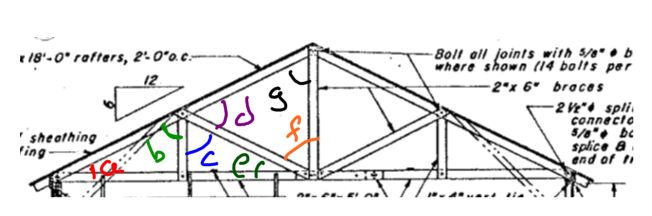
![]() |
| 13. The picture on the
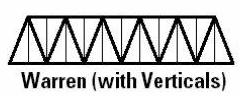
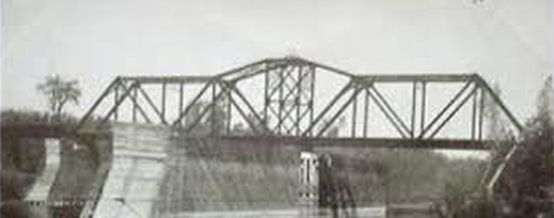
right shows a bridge using a Warren Truss as part of the bridge. The Warren truss consists of longitudinal members joined only by angled cross-members, forming alternately inverted equiangular triangle-shaped spaces along its length. ![]() ![]() In the Warren ( with Verticals ) each triangle has the top ( or bottom ) angle bisected, what are the measurements of each angle in the smaller triangle? 14. BONUS POINT! Do you know where this bridge is? |
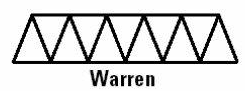
![]() |